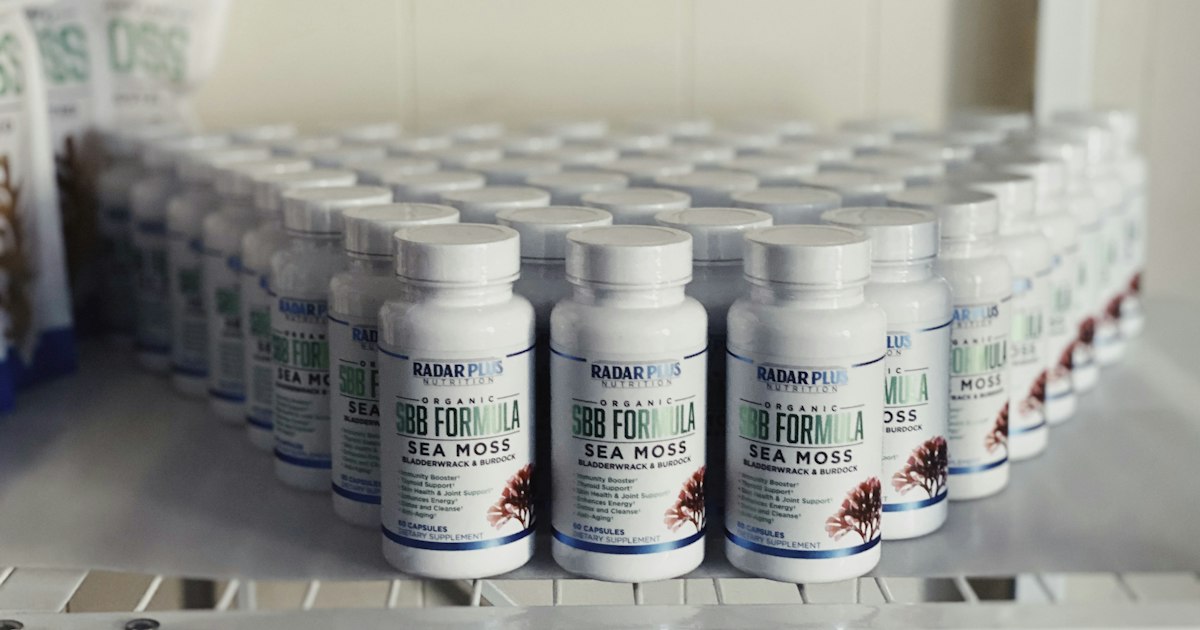
How to choose a quality HMB: what to look for on the label
HMB is sold in capsules, tablets, powders and as part of complexes, and labels often operate with different numbers: sometimes the mass of the calcium salt, sometimes the mass of "pure" HMB. Because of this, two products at the same price can differ in the amount of active substance. The editorial team explains how to read an HMB label, what to pay attention to in the composition and how to calculate the real cost of a serving.
The form of HMB: calcium salt or free acid
There are two main forms of HMB on the market. The first is the calcium salt, monohydrate (HMB-Ca, CaHMB). It was used in the vast majority of studies, starting with the work of Nissen et al. in 1996. It is a stable powder, convenient for capsules and tablets, so it is most often seen on the shelves.
The second form is the free acid HMB (HMB-FA). It is usually produced in liquid or gel form, sometimes buffered. Fuller et al. (2011) showed that the free acid reaches peak plasma concentration faster and is better retained by tissues compared with the calcium salt.
However, a better pharmacokinetic profile does not automatically mean better results in training. There are no convincing independent studies that would show an advantage of HMB-FA in gains of strength or muscle, and the loudest positive results with the free acid have not been reproduced by other groups.
For most buyers, the calcium form is a rational choice: it is better studied, more stable and usually cheaper per gram of HMB. The free acid can be considered if a rapid rise in concentration before training is important or if, for some reason, additional calcium must be avoided.
| Parameter | HMB-Ca (calcium salt) | HMB-FA (free acid) |
|---|---|---|
| Number of studies | Large | Limited |
| Speed of appearance in the blood | Slower | Faster (Fuller et al., 2011) |
| Format | Capsules, tablets, powder | Liquid, gel, capsules |
| Additional calcium | Yes | No |
| Proven advantage in results | Baseline standard | Not proven |
How much HMB is really in a serving
The most common ambiguity on the label is whether it refers to the mass of the salt or the mass of HMB itself. The calcium salt monohydrate consists of two HMB residues, a calcium atom and a water molecule. By stoichiometry, calcium accounts for about 13–14% of the mass, water for a few more percent, and HMB accounts for about 80% of the mass of the compound.
So "1000 mg of HMB-Ca" is about 800 mg of HMB in terms of the free acid. Conscientious manufacturers indicate both values or write directly in which form the mass is given. If the label says only "HMB 1000 mg" without specifying the form, it is worth contacting the manufacturer or assuming that it refers to the mass of the salt.
In studies, 3 g of HMB-Ca per day, divided into several intakes, was most often used. The ISSN position (2013) also gives a guideline of about 38 mg per kilogram of body weight. If one capsule of a product contains 500 mg of salt, six capsules per day will be needed to reach the research dose, and this is important to take into account when assessing cost.
- Find the mass of HMB per serving and clarify the form (salt or free acid).
- Calculate how many servings are needed for 3 g of HMB-Ca or an equivalent.
- Determine how many days the package will last.
- Divide the price by the number of days — this is the real cost.
Composition, excipients and complexes
In a quality single-ingredient HMB product, besides the active substance, there is usually only the capsule shell (gelatin or hypromellose) and a small amount of excipients such as magnesium stearate or silicon dioxide. A short and transparent composition is a good sign.
HMB is often added to complexes with creatine, BCAA, vitamin D, as well as to fat burners and pre-workout mixes. Here the main question is the amount of HMB per serving. Not infrequently a complex contains only a few hundred milligrams of HMB, which is significantly less than research doses, and its presence serves more as a marketing argument.
Particular attention should be paid to stimulants in the composition of complexes. Caffeine, synephrine, yohimbine and similar substances change the safety profile, can raise blood pressure and heart rate, and worsen sleep. For people with cardiovascular diseases such products may be contraindicated.
"Proprietary blends" without disclosing the amount of each ingredient make it impossible to assess effectiveness and safety. For athletes who undergo doping control this is also a risk: a study by Geyer et al. (2004) found undeclared prohormones in some supplements on the international market.
Certification, labeling and red flags
Independent batch certification is the best external marker of quality. The Informed Sport, Informed Choice and NSF Certified for Sport programs test products for the presence of prohibited substances. The IOC consensus on supplements (2018) recommends that athletes give preference to precisely such products.
Some manufacturers indicate on the label that they use licensed or patented HMB raw material from a well-known supplier. This indicates a controlled origin, although in itself it does not guarantee an effect. It is useful when the batch number, production date, expiration date and company contact details are indicated.
- Promises of an "effect like steroids" or "plus 5 kg of muscle in a month."
- The form of HMB is not indicated and it is unclear whether it is the mass of the salt or of the pure substance.
- The dose per serving is several times lower than research doses without explanation.
- Proprietary blends, hidden stimulants.
- Lack of information about the manufacturer, batch and expiration date.
Finally, pay attention to storage conditions. The calcium salt is fairly stable, but the packaging should be tightly closed and protected from moisture. Liquid forms of the free acid may have a limited period of use after opening, which should be indicated on the label.
Editorial conclusions
Quality HMB is a product with a clearly indicated form, an amount of active substance per serving, a short composition without hidden stimulants and, ideally, with independent batch certification.
The calcium salt remains the most studied and economical form; the free acid is absorbed faster, but its advantage in results has not been proven.
Compare cost not by the package but by the day of intake at the dose used in studies, and do not overpay for marketing promises.
The editorial team also recommends reading the materials "HMB: forms of release and which to choose," "How to choose a quality L-carnitine: what to look for on the label" and "The history of HMB: how the supplement became popular."
References
- Wilson JM, Fitschen PJ, Campbell B, et al. International Society of Sports Nutrition Position Stand: beta-hydroxy-beta-methylbutyrate (HMB). J Int Soc Sports Nutr. 2013;10(1):6.
- Fuller JC Jr, Sharp RL, Angus HF, et al. Free acid gel form of β-hydroxy-β-methylbutyrate (HMB) improves HMB clearance from plasma in human subjects compared with the calcium HMB salt. Br J Nutr. 2011;105(3):367–372.
- Nissen S, Sharp R, Ray M, et al. Effect of leucine metabolite β-hydroxy-β-methylbutyrate on muscle metabolism during resistance-exercise training. J Appl Physiol. 1996;81(5):2095–2104.
- Maughan RJ, Burke LM, Dvorak J, et al. IOC consensus statement: dietary supplements and the high-performance athlete. Br J Sports Med. 2018;52(7):439–455.
- Geyer H, Parr MK, Mareck U, et al. Analysis of non-hormonal nutritional supplements for anabolic-androgenic steroids — results of an international study. Int J Sports Med. 2004;25(2):124–129.
- Sanchez-Martinez J, Santos-Lozano A, Garcia-Hermoso A, et al. Effects of beta-hydroxy-beta-methylbutyrate supplementation on strength and body composition in trained and competitive athletes: a meta-analysis of randomized controlled trials. J Sci Med Sport. 2018;21(7):727–735.
Andriy Melnyk
A strength-sports coach and author of programs for beginner and intermediate levels. Writes about training planning.